ME: So yes… time and biography… the organising principles of meaning…
Yeah, the books, films, music… all the media we love most are all kind of time machines.
All those podcast interviews, history documentaries, diaries by politicians, films about Bruce Springsteen or Bob Dylan… gallery retrospectives… are ways of navigating through the story of people’s lives… reconstructing and tracing what led to what.
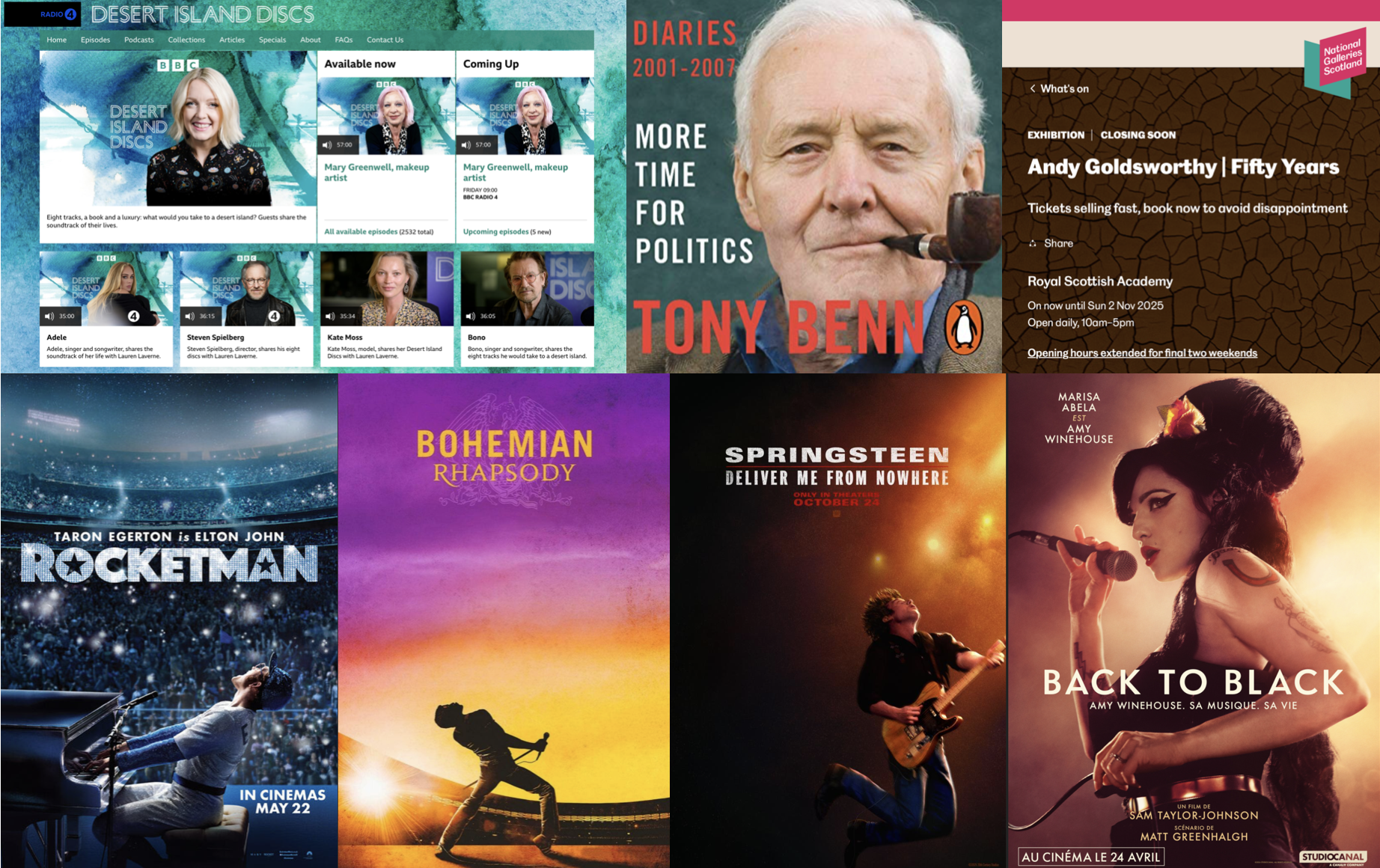
Yes. And Lifespan would take the same raw material and turn it into a shared, navigable, generative web-thing.
OK, and this is what you mean by “OpenStreetMap for time and a personal temporal Wikipedia”?
Yeah. But there’s a lot of other stuff.
What other stuff?
That’s the question… and that’s why we’re having this conversation.
How do you make something that taps into and explores this kind of thinking?
I’m assuming you have some ideas about this?
Yes. And I’ve built a thing.
Do I get to see this thing?
Yes, yes. You really do. I just need to get some things out of the way first…
You mean things like “hasn’t this been done before?”
Things like that, yes.
And I think the answer is - surprisingly - “no”…
Wikipedia tells you about The Beatles or JFK in isolation, but not about how they intersect…
…and least of all with you.
But I don’t “intersect” with either of them, do I?
Well… we can talk about that… this is where the magic happens 🪄
Later parts of this conversation will explain this, when I’ve written them.
OK… but you’re talking about some ideas that have definitely been done before, right?
Yeah, timeline tools exist, but they’re read-only. They present information, they don’t involve you.
HistoryPin is a bit more interactive - it’s about crowdsourcing old photos - but it’s just for places, and in a pretty specific way.
Err… Facebook?
Yeah, Facebook and the rest do hold all your “life data” (if you use them), but… well, it’s very, very different. Facebook is about social networking. This isn’t that.
What about Facebook Timeline?
We could have a whole separate conversation about this…
Perhaps another time…
But I can imagine you’ll say something about…
- Facebook optimising for interaction in the moment and for addictive social engagement…
- how it treats everything as a timestamped “post”…
- and how the timeline feature is just a shallow chronological representation with no semantic depth?
- and… well… Facebook
Yeah 🤦🏼♂️
What’s different about Lifespan is that it’s not meant to be a realtime social network. It’s… more like an all-time reflective network.
It’s about zooming back and seeing the wood for the trees. And planting trees.
There’s a mirror effect, where your own time bounces off shared time, and back again.
Somehow.
We’ll come back to this 😉
I’m going to have to take your word for it…
…but you’ve built this thing, yes?
Some of it…
But as a sort of (massive) conceptual sketch.
It needs a lot more thinking 👨🏼💻
Fair enough. But…
…where did this all come from?
Well… I’ve been thinking about this for bloody ages.
It’s been the thing I think about in between doing other things, like having children and jobs and stuff.
I’ve tried lots of times over the years to prototype parts of it, but hit technical walls pretty quickly… 🚷
It needs a group of specialists, and I’m a generalist.
What happened?
AI happened ✨
This year I’ve been able to fudge together a virtual, artificial group of specialists: ChatGPT, Cursor, Claude…
…enough to get a “house of cards prototype” on its feet, stitching together lots of the ideas I’ve come up with.
House of cards? 🃏
Yeah. It stands, but it wobbles and falls over sometimes. The point is: you can finally glimpse what it might be.
And… not wanting to sound like a character from a shit film, but what do you want from me ❓
That’s the important bit. A few things….