ME: Hello again.
👋🏻 Hello.
So, a deeper dive?
Yeah - it has to happen at some point.
Where to start, though?
Good question.
How about you just jump into the middle somewhere, and we’ll see if we can find our way home?
OK let’s try it. But this is just gonna be a meandering chat for now.
OK. We can just see how it goes.
Big questions might surface in the wrong order…
It’s fine.
Alright.
So, you know when you see a blue plaque?
Like these?
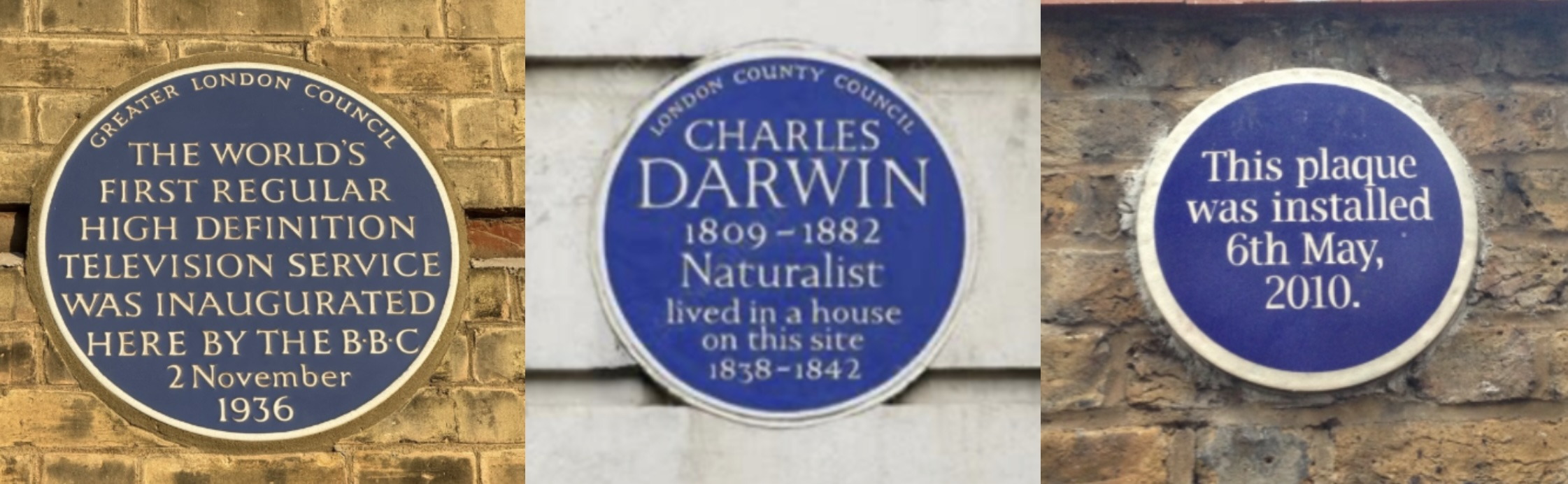
Yeah, those ones.
Well… have you noticed how you can’t click on them?
Yes. Physical objects are famously unclickable…
They are.
But imagine if they were, for a second. What information would they have to hold?
Well… you tell me. Let’s pick the Darwin one…
OK, so we have:
Charles DarwinNaturalistlived 1809-1882- “this site” (which is on
Gower Street, London, WC1E 6BT)lived at that place between 1838-1842
OK so far…
Right, so if we start at the top, and want to know about “Charles Darwin”, we can look him up on Wikipedia…
https://en.wikipedia.org/wiki/Charles_Darwin
This gives us plenty of information that we can browse, page by page.
But do you see how none of the dates are links?
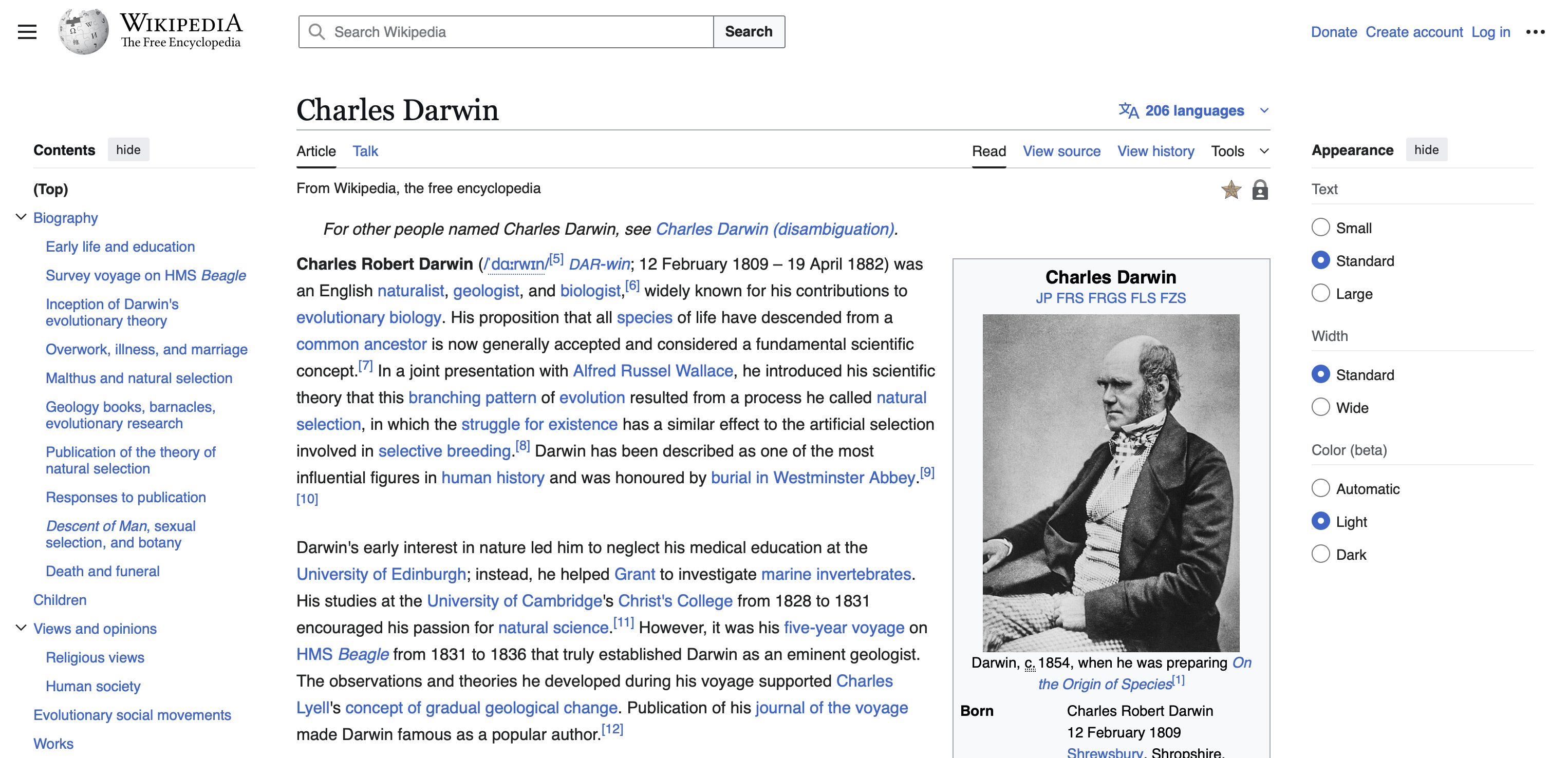
Yeah…
So what if this information was time-aware?
“His studies at the University of Cambridge’s Christ’s College from 1828 to 1831 encouraged his passion for natural science.”
This sentence is actually a few different time-related things:
- Charles Darwin (a person who lived from 1809 to 1882)
- Christ’s College, Cambridge (founded in 1437, and it still exists)
- Darwin’s time studying there (between 1828 to 1831)
So let’s draw those things like this…
While we’re here, we can do the same for other information we find…
So… we have two “education” time periods, right? Education spans, we’ll call them.


Ah, OK… “span” is an important word, right?
Very.
OK, with you so far.
So, wouldn’t it be interesting to do the same thing for yourself, and see how these things line up?
What do you mean?
Well, I just happen to have studied at The University of Edinburgh.
Oh did you now?
Yep.
And those dates don’t overlap, obviously.
Obviously.
But they kind of do, if you look at them relatively rather than absolutely.
Go on…
Well, Darwin was in Edinburgh at age 18, right?
1827 - 1809 = 18And so was I…
1994 - 1976 = 18So we’ve just found an overlap that shows that I have a connection to Charles Darwin.
Congratulations 🤓
Yeah, OK, it’s only very slightly amazing…
But what if you could apply this logic to everything?
Represent information in terms of spans of time and the things they represent, rather than just talking about the things they represent?
Like what?
OK, let’s go back to that blue plaque. We can look it up and we’ll find this https://www.english-heritage.org.uk/visit/blue-plaques/charles-darwin/
From this, we have another span, right?
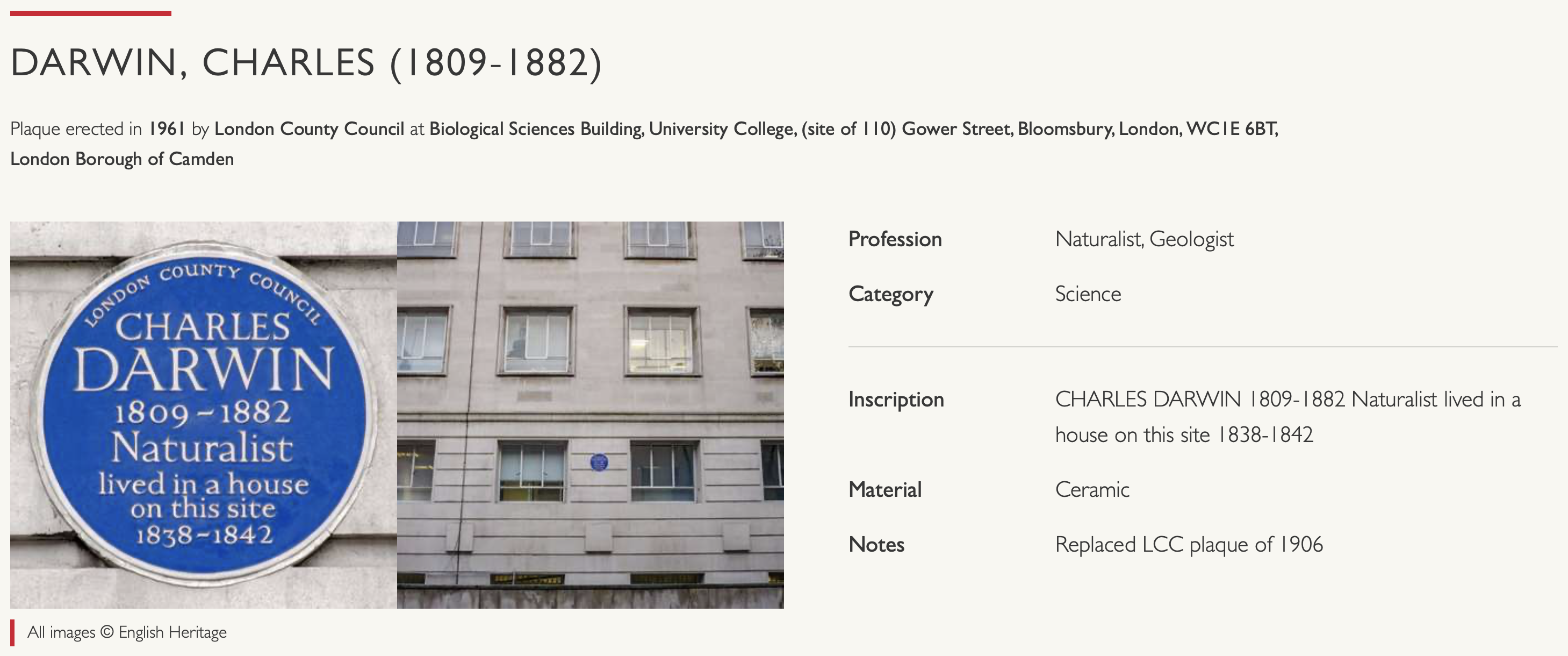

Ah yes…
But we could show this differently…
So what where was I living at this age? What would the overlap of “residence spans” look like?


A mirror effect?
Yeah.
And we could do this for all the things in Darwin’s life and my life…
And then see them in absolute time, as well…


And you’re saying we could do this for everything?
Yeah. If it’s in Wikipedia, we can bring it into Lifespan.
Here’s The Beatles in Wikipedia…
But in Lifespan, you can see this differently…
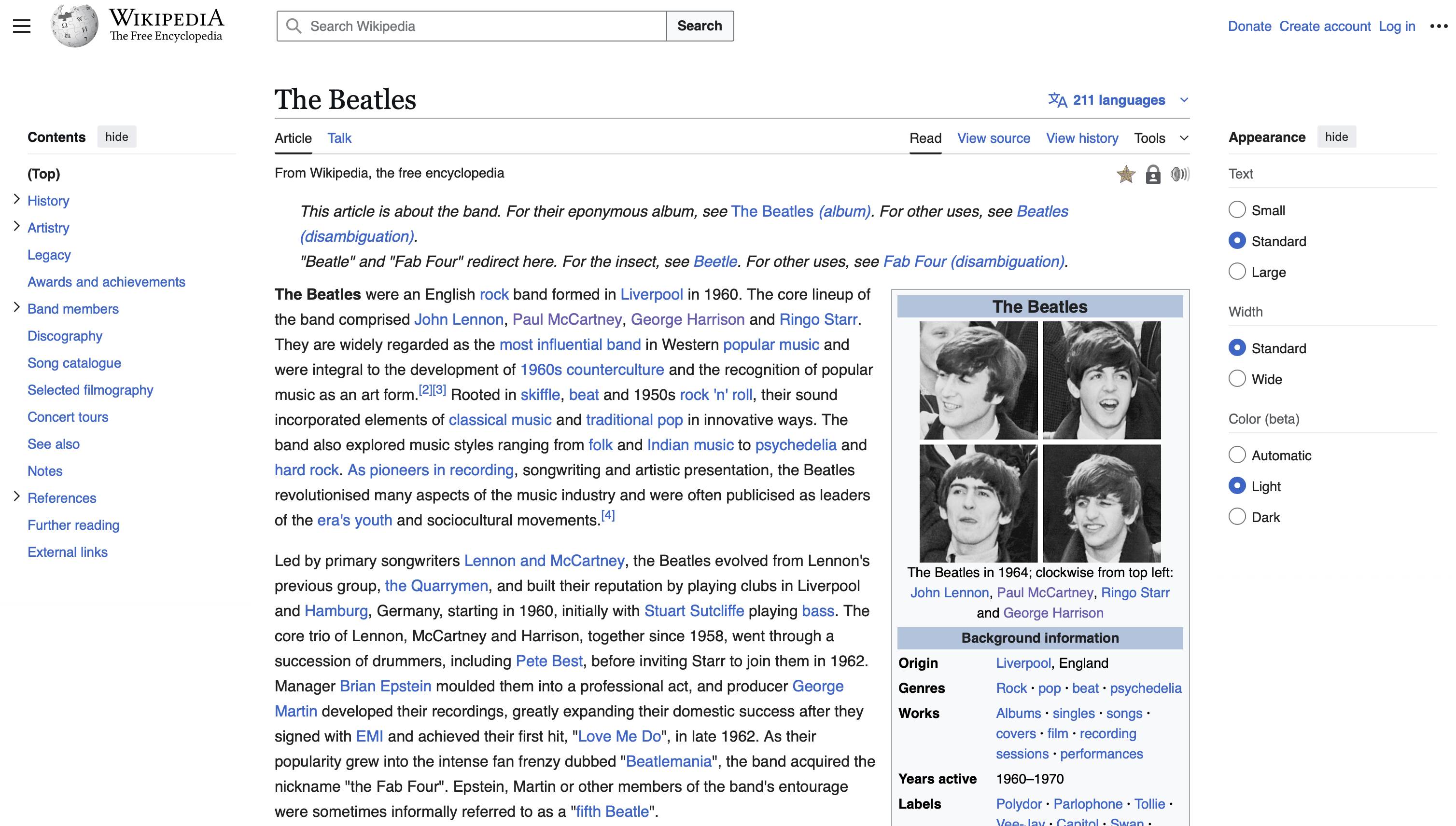
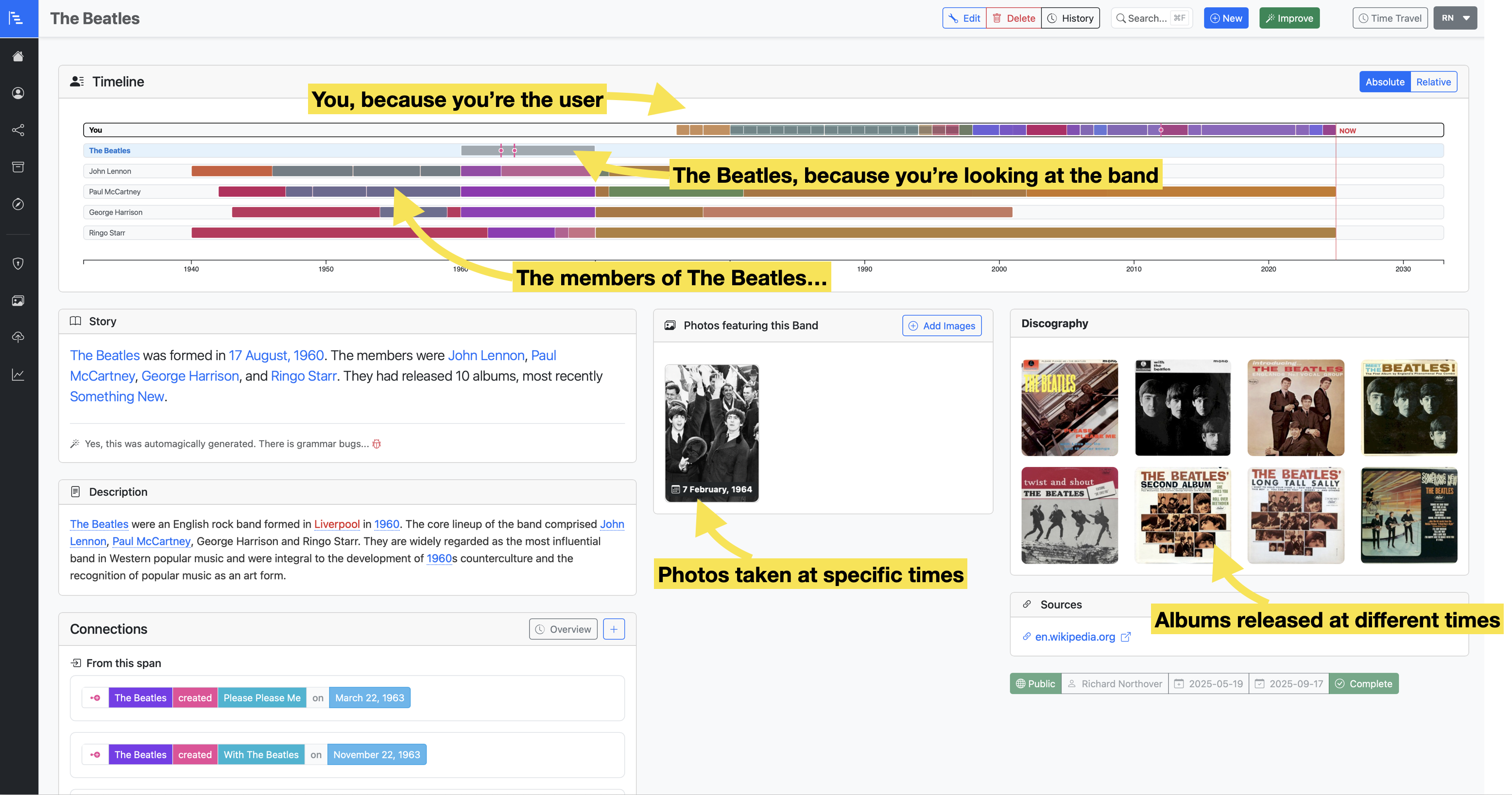
What if we try another band?
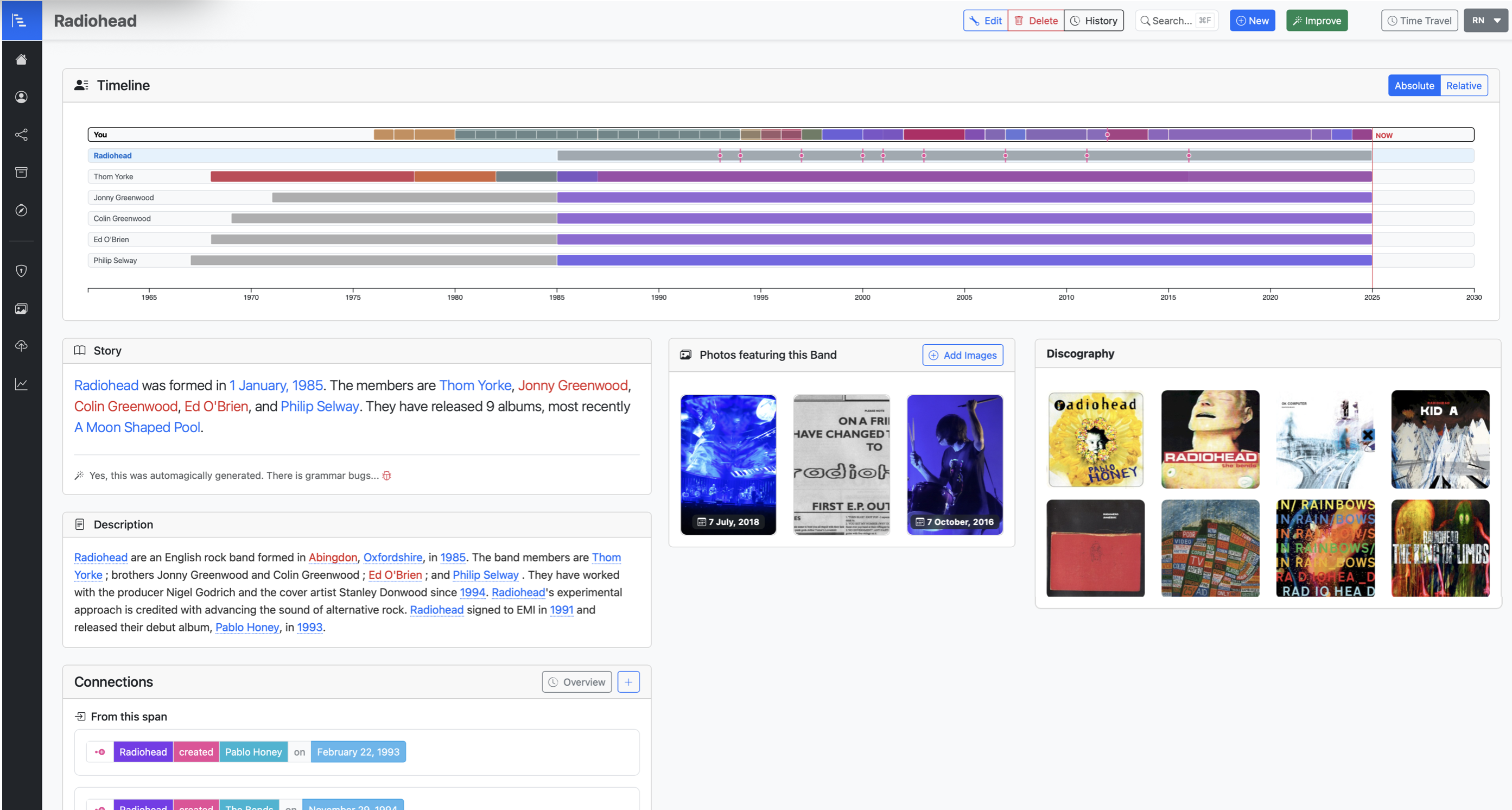
And all that just came from Wikipedia?
Yeah, and MusicBrainz. All open data with APIs.
Got it.
So Lifespan sort of brings it all together? Gives you a different perspective?
Exactly. But that’s just the tip of the iceberg.
Why are some of the timelines full of coloured lines and others not?
The same reason that some links are blue and others red… it’s like on Wikipedia, where some things are finished pages and others are “stubs”.
In Lifespan they’re called “placeholders”… the information isn’t complete enough.
I see. And looking at it, I’m thinking there different kinds of span, then?
Yes, lots.
You can actually have anything you like, but at the moment we have
people,places,organisations,bands,things…
Things?
Yeah, I should have said that there’s
typesandsubtypes.Spans of type “thing” includes
books,albums,tracks, and so on.They all exist in time. Different kinds of span have different properties, as well as the core Lifespan things (which means dates).
Show me…
OK, this is a span of type “thing”, subtype “album”…
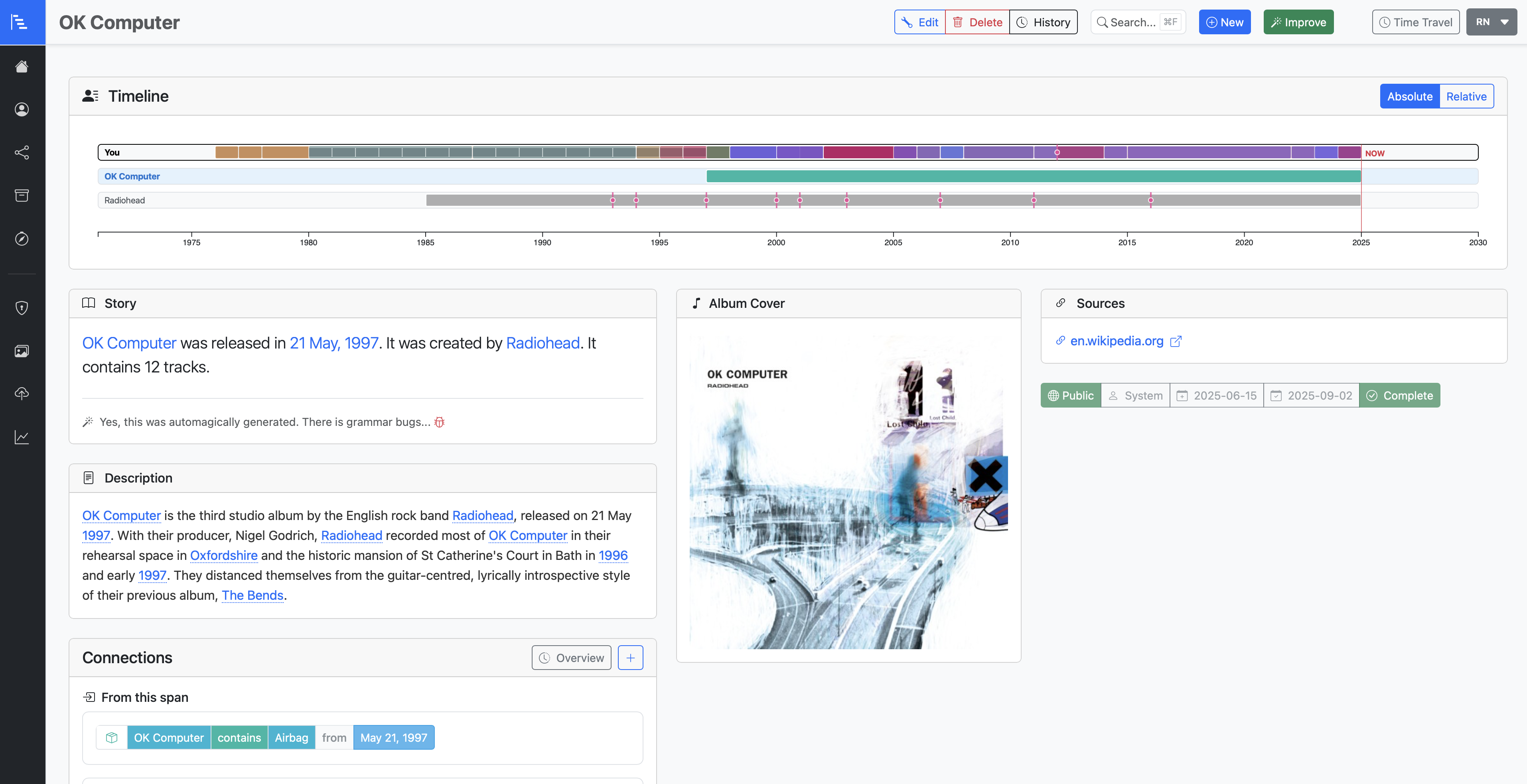
Right, I see what’s happening here!
Yes… a big network of spans, of different kinds, all related to each other.
Ah, so how do we show how they relate to each other?